


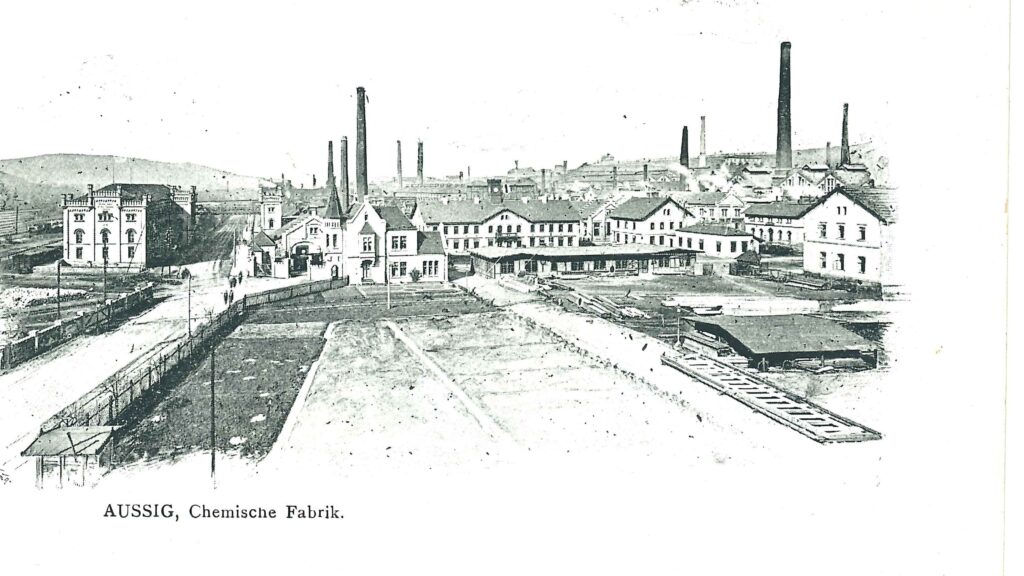
170 Years at the Forefront of Innovation:
The Story of SPOLCHEMIE, the Oldest Chemical Plant in Europe, Conquering the World from Aussig
In the panorama of Ústí nad Labem, one silhouette stands out — not merely as a symbol of industry, but as a living chronicle of Europe’s technological revolution. The Association for Chemical and Metallurgical Production, known under the brand name Spolchemie, is celebrating an impressive 170 years since its founding this year. The story of this now purely Czech company is not just about chemistry; it is a narrative of resilience, vision, and transformation into a modern leader that today sets the direction in sustainable technologies.
From Viennese Palaces to the Heart of Czech Industry
Few industrial enterprises can boast such an illustrious pedigree. The history of Spolchemie began on February 13, 1856, in the Viennese palace of Prince Johann Adolf Schwarzenberg. At its inception stood the most prominent figures of the Austro-Hungarian Empire — aristocratic families such as the Fürstenbergs, Choteks, and Nostitzes joined forces with elite bankers to create an industrial powerhouse.
By the end of the 19th century, thanks in part to close cooperation with the legendary Solvay company, Spolchemie effectively dominated the chemical market throughout the monarchy, and Ústí nad Labem became a strategic point on the map of global industry.
Rebirth for the Modern Age
The road to its 170th anniversary, however, was not paved solely with success. The company’s history is interwoven with periods of prosperity as well as profound crises. The most significant came with the global financial recession, which brought Spolchemie to the very brink of existence.
Fortunately, bold crisis management and new financing made it possible to stabilize the company and give it a new direction through transformation into a technologically advanced 21st-century player. Today, Spolchemie is one of the largest exporters in the Czech Republic, with products used across a broad spectrum of industries — from automotive manufacturing to the construction of wind power plants.
Spolchemie’s current strength lies primarily in the production of epoxy resins, in which it ranks among Europe’s absolute leaders. The company was also the first in the world to obtain prestigious certification for its “green” epoxies made from waste glycerin, thereby defining new sustainability standards within the industry.
This technological edge is complemented by modern membrane electrolysis, representing the most environmentally friendly production method available in the sector and reaffirming the company’s ecological commitment to future generations.
Chemistry with a Human Face
Spolchemie understands that its true value lies not only in reactors and laboratories, but in people and in the region where it operates. Corporate social responsibility is deeply embedded in its everyday operations.
The company has long maintained a transparent minigrant system supporting local communities, assisting children’s organizations, people with disabilities, and cultural development initiatives. It is also inseparably linked with the legendary Ústí Half Marathon, where, as the main partner, it actively promotes a healthy lifestyle and sports activities throughout the North Bohemian region.
A Future Built on Tradition
A key milestone in the company’s modern era was its integration into the Kaprain investment group. For Spolchemie, membership in Kaprain represents not only security for further development, but also confirmation of its role as a key player in the Czech and European economy.
Looking back at 170 years of Spolchemie’s history, it is clear that its greatest asset is its ability to continuously adapt. Today’s company is a modern, environmentally conscious industrial giant proving that even traditional heavy industry can drive sustainable innovation.
The formula for the decades ahead is clear: combining deep-rooted tradition, the courage to innovate, and responsibility toward its surroundings. Spolchemie thus enters its next chapter not merely as a witness to history, but as a confident architect of a technologically advanced future.